Self loading concrete mixer working principle is based on automatic loading, weighing, mixing, transporting and discharging in one mobile machine. This helps contractors produce concrete directly on the job site with fewer separate machines.
Thank you for reading this post, don't forget to subscribe!
A self loading concrete mixer combines a loader, batching bucket, water supply system, mixing drum, driving chassis and discharge system in one mobile machine. Instead of using a separate wheel loader, batching plant, transit mixer and discharge equipment, one operator can load aggregates, add cement and water, mix concrete on site, transport it over short distances and discharge it where the project needs it.
For contractors, dealers and project buyers, understanding the self loading concrete mixer working principle is useful before choosing a model. The basic workflow is similar across the XQ 0.8-5.0 m3 range, but capacity, engine power, water tank size, drive axle and discharge configuration change as the machine size increases.
Related equipment range: self loading concrete mixer manufacturer
What Is a Self Loading Concrete Mixer?
A self loading concrete mixer is a mobile concrete production machine designed for construction sites where fixed batching plants are not practical. It loads raw materials by itself, mixes them inside a rotating drum, and discharges concrete directly at the jobsite.
The machine is commonly used for:
- Rural roads and small bridges
- House building and farm construction
- Remote construction sites
- Foundation and drainage work
- Contractors who move between multiple small projects
- Dealers who need compact and export-friendly concrete equipment
Unlike a traditional mixer truck, a self loading mixer does not only transport ready-mixed concrete. It can also perform on-site batching and mixing, which gives the contractor more flexibility when the project location is far from a commercial batching plant.
Step-by-Step Working Principle
1. Material Loading
The machine uses a front bucket to load sand, aggregate and other materials. The bucket lifts the material and feeds it into the mixing drum. On most jobsites, the operator loads aggregates first, then cement, and then controls the water intake according to the required mix.
Bucket capacity increases with machine size. For example, XQ’s 0.8 m3 model uses a 0.25 m3 bucket, while the 5.0 m3 model uses a 0.75 m3 bucket. This affects loading efficiency and the number of bucket cycles required for one batch.
2. Water Intake and Dosing
Water is supplied from the onboard water tank. XQ self loading concrete mixers use timed water intake as a standard feature across the range, helping the operator add water in a more controlled way.
| Discharge Capacity | Water Tank Capacity |
|---|---|
| 0.8 m3 | 400 L |
| 1.5 m3 | 550 L |
| 2.0 m3 | 750 L |
| 2.6 m3 | 750 L |
| 3.5 m3 | 850 L |
| 4.0 m3 | 950 L |
| 5.0 m3 | 1100 L |
For more accurate batching, an electronic weighing system can be selected as an optional configuration. This is useful for buyers who need more repeatable mix quality across many batches.
3. Drum Mixing
After materials enter the drum, the hydraulic motor drives the drum to rotate and mix the concrete. The XQ series uses a mixing speed of 20 r/min across the 0.8-5.0 m3 range.
Smaller models use A2FM63 cycloid motors, while larger 3.5-5.0 m3 models use A2FM63 plunger motors. The motor type, tank volume and discharge capacity should be considered together when selecting a machine for daily production needs.
4. Site Travel During Mixing
The machine can travel while the drum continues mixing. This is one of the main reasons contractors choose self loading mixers for scattered jobsites.
Across the XQ range, maximum travel speed is up to 35 km/h. The 0.8 m3 and 1.5 m3 models list 30 degree gradeability, while the 2.0-5.0 m3 models list 40 degree gradeability. Full-time 4WD drive axles are used across the range, from JBJ-8T on smaller models to JBJ-20T on the 5.0 m3 model.
5. Concrete Discharge
When the mix is ready, concrete is discharged through the chute. Larger models include a hydraulic discharge chute and 270 degree slewing support, which helps place concrete more flexibly around the machine.
For heavy-duty jobsite cleaning and daily maintenance, 2.0 m3 and larger models commonly include a high-pressure cleaning system. For 2.6 m3 and larger models, LED lighting and a diesel self-priming pump are also standard features.
Main Systems Inside a Self Loading Concrete Mixer
Loading System
The loading system includes the bucket, lifting structure and operator controls. Its job is to reduce manual loading and make the mixer independent from a separate loader.
Mixing Drum System
The drum is the core mixing component. XQ tank volumes range from 1.3 m3 on the 0.8 m3 discharge model to 8.28 m3 on the 5.0 m3 discharge model.
| Discharge Capacity | Tank Volume | Typical Use |
|---|---|---|
| 0.8-1.5 m3 | 1.3-1.93 m3 | Small residential and narrow-site work |
| 2.0-2.6 m3 | 3.45-3.95 m3 | General construction and rural roads |
| 3.5-4.0 m3 | 5.5-6.64 m3 | Medium contractors and higher daily output |
| 5.0 m3 | 8.28 m3 | Heavy-duty site work and larger pours |
Power and Transmission System
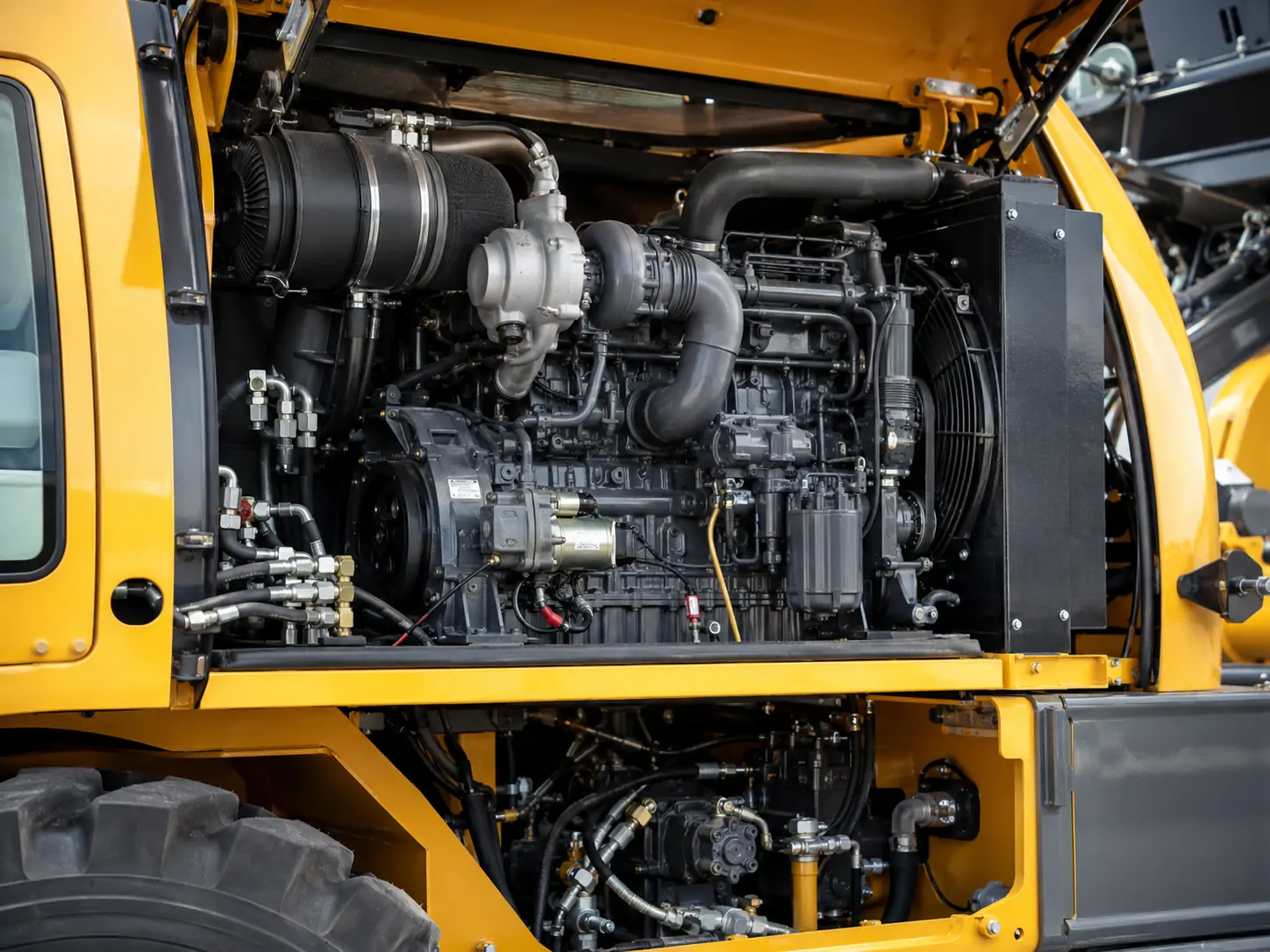
The power system drives travel, hydraulic functions and mixing. XQ models use diesel engines including Yunnei, Yuchai, YTO and optional Weichai configurations depending on capacity.
The 5.0 m3 model, for example, uses a YTO 6105 Turbo as standard and optional Weichai 6105 Turbo, with 92 kW rated power and JBJ-20T full-time 4WD axle. See the XQ-SM500 5.0 m3 self loading concrete mixer for the flagship model.
Water System
The water system stores and supplies water for mixing. Timed water intake is standard, while electronic weighing is optional for buyers who need tighter control.
Operator and Safety Systems
Standard features across the series include:
- Dual camera system
- Display screen
- Luxury suspension seat
- Digital dashboard
- Unloading vibrator
- Timed water intake system
Larger models may also include a pneumatic ladder, hydraulic discharge chute, LED lighting system, diesel self-priming pump and high-pressure cleaning system.
How Capacity Affects the Working Process
The working principle stays the same, but capacity changes site efficiency.
Smaller 0.8-1.5 m3 machines are easier to move on narrow rural roads and small construction sites. Mid-size 2.0-2.6 m3 models balance output and mobility. Larger 3.5-5.0 m3 models are better for contractors who need more concrete per batch and more complete jobsite systems.
If you are still choosing between capacity classes, read the full self loading concrete mixer buying guide.
Self Loading Mixer vs Traditional Concrete Supply
A traditional concrete supply workflow may require a batching plant, loader, transit mixer and sometimes a concrete pump or additional discharge equipment. A self loading mixer reduces this chain by combining loading, mixing, transport and discharge in one machine.
This does not mean it replaces every batching plant. For large continuous commercial concrete supply, a fixed plant can still be more efficient. But for small and medium sites, remote projects and contractors who move often, the self loading mixer can reduce equipment dependency and improve flexibility.
For contractors who want to apply this machine in real construction markets, our Nigeria self loading concrete mixer guide explains how loading, weighing, mixing and discharging functions support road, housing and rural construction projects.
FAQ
Can one operator run a self loading concrete mixer?
Yes. The machine is designed so one trained operator can control loading, water intake, mixing, travel and discharge. Operator training is still important for mix quality and jobsite safety.
What capacity should I choose?
For small sites, 0.8-1.5 m3 can be enough. For general construction, 2.0-2.6 m3 is a common middle range. For contractors with higher output needs, 3.5-5.0 m3 models are more suitable.
Does a self loading mixer need an external loader?
Usually no. The bucket loading system is one of the main advantages of the machine. However, the site still needs organized material storage so the operator can load efficiently.
Can XQ support export buyers and dealers?
Yes. XQ Machinery supplies self loading concrete mixers for global contractors, dealers and machinery buyers. You can contact XQ Machinery for model selection, configuration and export support.
Conclusion
The self loading concrete mixer works by combining loading, water dosing, drum mixing, site travel and concrete discharge in one mobile machine. For many contractors, this structure reduces dependence on separate equipment and makes concrete production more flexible on remote or scattered jobsites.
XQ’s 0.8-5.0 m3 range gives buyers several capacity choices, from compact machines for small projects to the 5.0 m3 XQ-SM500 for heavier site work. The right model depends on batch volume, site access, road conditions, daily output and export configuration needs.
To compare available models, visit the self loading concrete mixer category or contact XQ Machinery for a configuration recommendation.