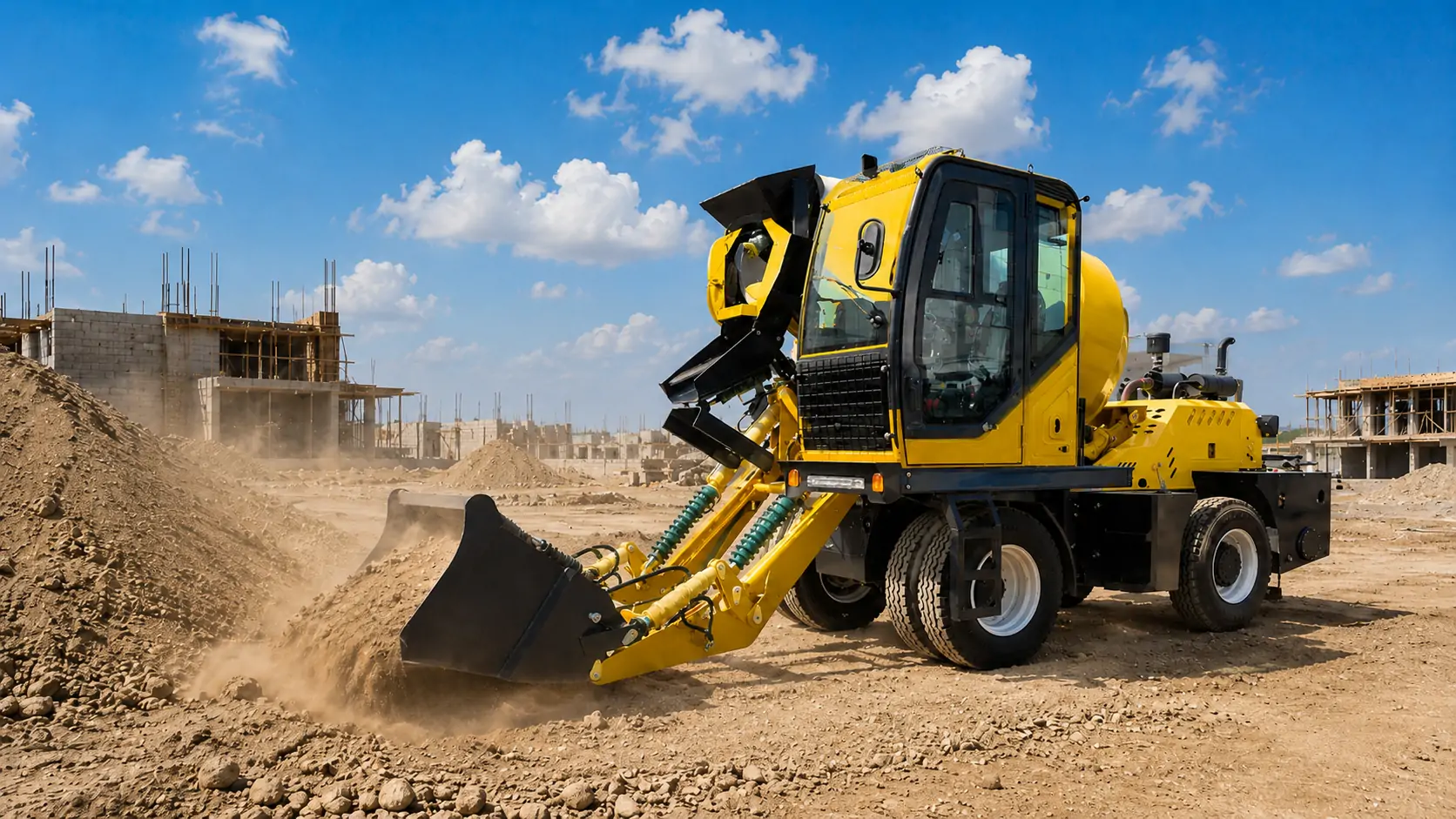
For construction project managers, contractors, and equipment fleet owners across Africa, Southeast Asia, and the Middle East, selecting the right self-loading concrete mixer can mean the difference between on-time project delivery and costly downtime. How to choose a self loading concrete mixer is one of the most common questions we receive at XQ Machinery, and for good reason: these versatile machines combine loading, weighing, mixing, and discharging into a single unit, eliminating the need for separate loaders, batchers, and transport trucks.
Thank you for reading this post, don't forget to subscribe!
A wrong purchase decision can leave you with underpowered equipment that struggles on rugged job sites, or over-specified machinery that wastes fuel and capital. This comprehensive guide will walk you through everything you need to know: from understanding capacity ratings and engine types to comparing models and calculating your true return on investment. Whether you’re working on road construction in Nigeria, building projects in the Philippines, or infrastructure development in Saudi Arabia, this guide will help you make an informed purchasing decision.
What Is a Self Loading Concrete Mixer?
A self loading concrete mixer is a highly integrated mobile concrete production unit that performs four core functions in one machine:
- Loading: The articulated loading bucket scoops cement, sand, and aggregate from stockpiles
- Weighing: An integrated electronic weighing system ensures precise batch proportions
- Mixing: The rotating drum mixes materials to consistent concrete quality
- Discharging: The drum rotates in reverse to discharge concrete, with most models offering 270° rotation for multi-side discharging
Unlike traditional transit mixers that require a separate batching plant and loader, self loading mixers are completely self-sufficient units that can produce concrete directly on the job site. This makes them ideal for:
- Remote construction sites with limited infrastructure
- Small to medium concrete volumes (1-10 m³ per day)
- Projects requiring frequent relocation between sites
- Areas with limited access to ready-mix concrete suppliers
Key Factors When Choosing a Self Loading Concrete Mixer
1. Drum Capacity: Understanding Real vs. Rated Output
The most critical specification is drum capacity, but it’s essential to understand the difference between geometric volume and actual output:
- Geometric volume: The total volume of the drum (e.g., 3.5 m³)
- Actual output: Typically 70-75% of geometric volume, as the drum needs space for proper mixing
For example, a “3.5 m³ mixer” typically produces 2.5-2.6 m³ of concrete per batch. When selecting capacity, consider:
- Your average daily concrete requirement
- Batch size needed for your typical pour
- Transportation restrictions on road weight limits
Recommendation: Choose a mixer that delivers 20-30% more than your average daily requirement to account for peak demand periods. If you’re unsure between sizes, review our self loading concrete mixer manufacturer category for available capacity options.
2. Engine Power & Type
The engine is the heart of your self loader, powering both the drive system and hydraulic functions. Key considerations:
| Engine Type | Power Range | Best For |
|---|---|---|
| Yunnei (China) | 58-76 kW | Budget-conscious buyers, temperate climates |
| Yuchai (China) | 76-92 kW | Balanced performance, most popular choice |
| Cummins (US) | 100-125 kW | Heavy-duty applications, extreme temperatures, global parts availability |
Critical check: Ensure the engine manufacturer has service support in your country. A cheap engine becomes very expensive when you can’t get parts for routine maintenance. For configuration advice, contact XQ Machinery for export support before choosing engine and hydraulic options.
3. Drive System & Mobility
Self loading mixers operate on rugged construction sites, so mobility matters:
- 4WD (Four-Wheel Drive): Essential for most job sites, especially those with muddy or uneven terrain
- Tire size: Larger tires (16/70-20 or 20.5-25) provide better flotation and durability
- Turning radius: Smaller turning circles improve maneuverability on crowded job sites
Pro tip: If you’re working in areas with heavy rainfall or soft ground, invest in the largest tire size available for your model.
4. Weighing System Accuracy
Consistent concrete quality depends on accurate batching. Look for:
- Electronic load cells: More accurate than mechanical systems
- Digital display: Clear readout of each material weight
- Recipe memory: Ability to store multiple mix designs
- Printer option: For quality documentation on larger projects
A ±1-2% weighing accuracy is industry standard for good quality machines.
5. Discharge Rotation & Height
The ability to discharge concrete in multiple directions significantly improves on-site efficiency:
- 270° rotation: Standard on most modern models, allows discharging to front, left, and right sides
- Discharge height: 2.0-2.8 meters is typical; ensure it matches your transport vehicle heights
- Chute extension: Optional extra chutes for longer reach
Self Loading Concrete Mixer Capacity: 2.6m³ vs 3.5m³
0.8-1.5 m³ Output: Compact Class
Best for: Small contractors, residential construction, utility work, remote locations with narrow access roads
Typical applications:
- House foundations and slabs
- Drainage and culvert construction
- Small road repairs
- Rural building projects
Advantages:
- Lower initial investment ($30,000-45,000)
- Easier to transport between sites
- Lower fuel consumption (8-12 L/hour)
- Can access tighter work areas
Limitations:
- Not suitable for large volume projects
- Smaller cab may be less comfortable for full-time operation
2.0-2.6 m³ Output: Mid-Range Class
Best for: Medium contractors, road construction, commercial buildings, rental fleets
Typical applications:
- Road base and sub-base concrete
- Commercial building foundations
- Bridge abutments
- Medium-sized infrastructure projects
Advantages:
- Best balance of productivity and cost
- Most popular size for rental fleets
- Suitable for 80% of construction applications
- Good resale value
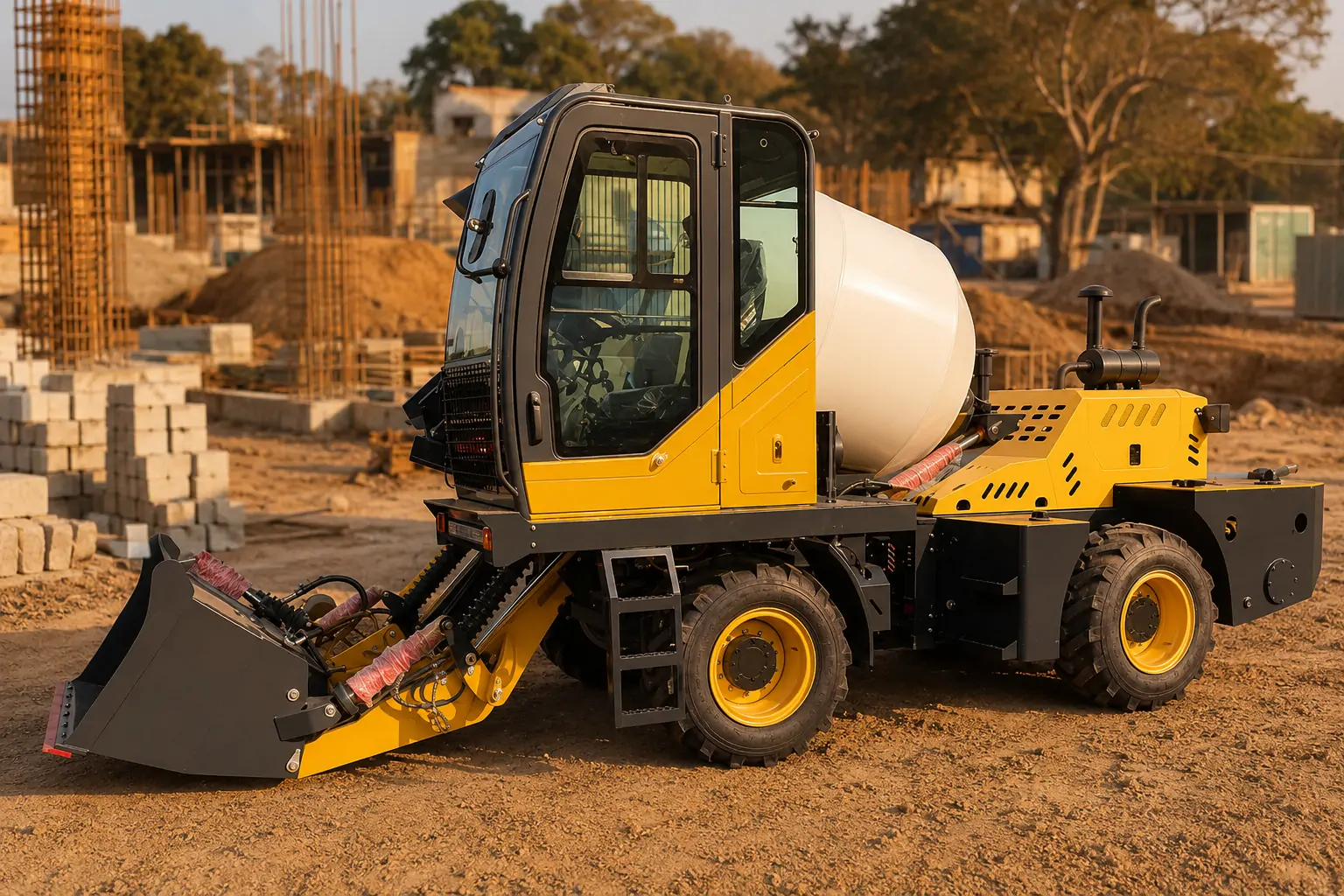
Check out our popular 2.6m³ self loading concrete mixer – XQ-SM260 for detailed specifications and pricing.
Limitations:
- May require special transport permits in some countries
3.5-4.0 m³ Output: Heavy-Duty Class
Best for: Large contractors, infrastructure projects, high-volume production
Typical applications:
- Highway construction
- Dam and irrigation projects
- Industrial building foundations
- High-volume ready-mix supply
Advantages:
- Maximum productivity (15-20 m³ per 8-hour day)
- Lower cost per cubic meter of concrete
- More comfortable operator cabs
- Better for continuous operation
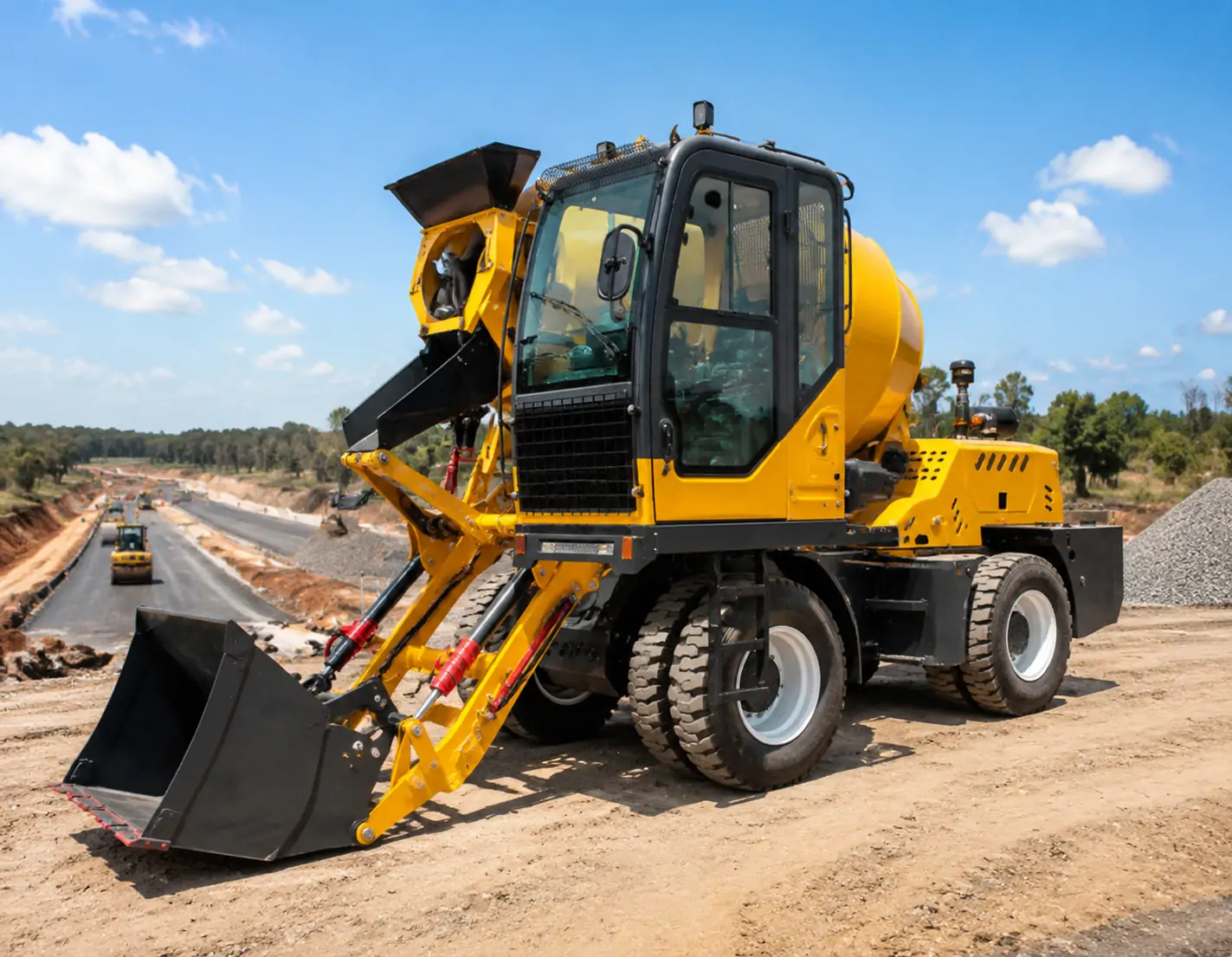
For large-scale projects, consider our 3.5m³ self loading concrete mixer – XQ-SM350 for maximum output.
Limitations:
- Higher initial investment ($70,000-100,000+)
- Higher fuel consumption (18-25 L/hour)
- May be too large for confined job sites
2.6m³ vs 3.5m³: Quick Comparison Table
| Parameter | 2.6m³ Model | 3.5m³ Model |
|---|---|---|
| Theoretical Output | 10-13m³/hour | 15-20m³/hour |
| Engine Power | 55-65kW | 75-85kW |
| Ideal Project Size | Small-Medium | Medium-Large |
| Price Range | $62,000-$72,000 | $75,000-$88,000 |
Self Loading Concrete Mixer Price Breakdown 2026
Price is often the first consideration, but it’s important to look beyond the initial purchase price and consider total cost of ownership. Understanding self loading concrete mixer price components helps you budget accurately and compare offers fairly.
2026 Price Ranges (FOB China)
| Output Capacity | Engine Type | FOB Price Range |
|---|---|---|
| 0.8 m³ | Yunnei 490 | $30,000 – 38,000 |
| 1.5 m³ | Yunnei 490 | $40,000 – 48,000 |
| 2.0 m³ | Yunnei 4102 | $52,000 – 60,000 |
| 2.6 m³ | Yuchai 4102 | $62,000 – 72,000 |
| 3.5 m³ | Yuchai 4105 | $75,000 – 88,000 |
| 4.0 m³ | Yuchai 4108 | $85,000 – 100,000 |
| 5.0 m³ | Cummins 6BT | $110,000 – 135,000 |
For current pricing and special offers, contact XQ Machinery for self loading concrete mixer prices and model recommendations.
For high-output jobsites that need 5.0m³ capacity, review the XQ-SM500 5.0 m3 self loading concrete mixer as the core heavy-duty option in the XQ Machinery mixer range.
Factors That Affect Price
- Engine upgrade: Cummins engines typically add $15,000-20,000 vs. domestic Chinese engines
- Electronic weighing system: $2,000-3,000 upgrade from mechanical weighing
- Air conditioning: $1,500-2,500 option (highly recommended for hot climates)
- ROPS/FOPS certified cab: $3,000-5,000 for safety certification
- Spare parts package: We recommend 5-10% of machine value in critical spare parts
- Shipping: $5,000-15,000 depending on destination port
Calculating Your ROI
Let’s look at a typical 2.6 m³ mixer ROI calculation:
Investment:
- Machine cost: $68,000
- Shipping & import: $12,000
- Total investment: $80,000
Operating costs (per 8-hour day):
- Fuel: 15 L/hour × 8 hours × $1.20/L = $144
- Operator: $40/day
- Maintenance: $20/day
- Total daily operating cost: $204
Revenue potential:
- 6 batches/day × 2.6 m³ = 15.6 m³/day
- Local ready-mix price: $70/m³
- Your production cost (materials + operating): $45/m³
- Profit per m³: $25
- Daily profit: 15.6 × $25 = $390
ROI timeline:
- Monthly profit (22 days): $8,580
- Payback period: ~9.3 months
Even at 50% utilization (11 days/month), your payback is approximately 18-19 months. This is why self loading concrete mixers are one of the best equipment investments for construction businesses in emerging markets.
Self Loading Mixer vs Traditional Mixer: Pros & Cons
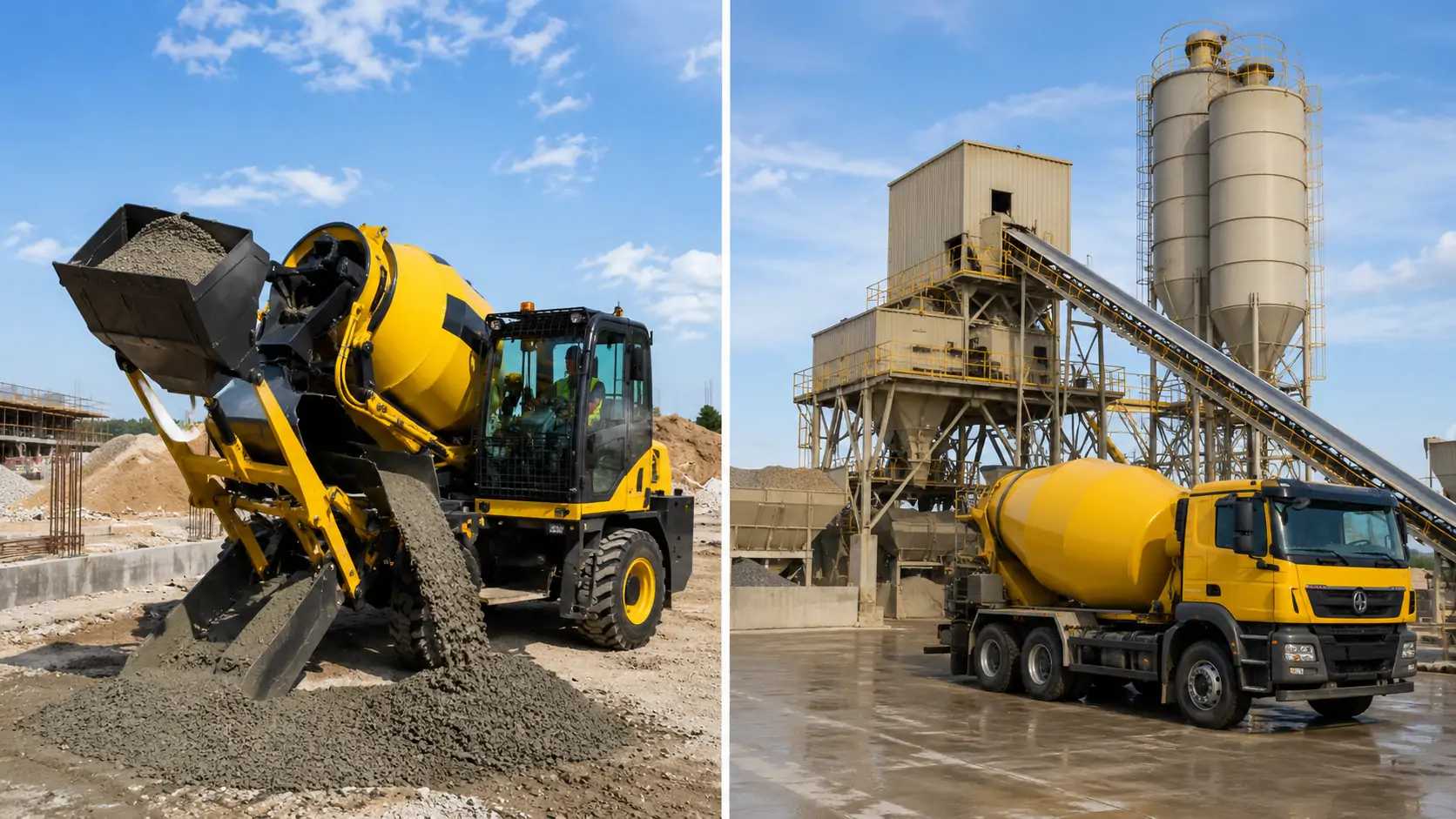
Traditional Transit Mixers
Pros:
- Higher volume capacity (6-12 m³ typical)
- Faster travel speeds on roads
- Mature technology with widespread parts availability
Cons:
- Requires separate batching plant ($50,000-150,000+)
- Requires separate loader ($30,000-50,000+)
- Cannot produce concrete on-site
- Higher total investment
- Not suitable for remote locations
Self Loading Concrete Mixers
Pros:
- All-in-one solution: No additional equipment needed
- Produce concrete directly at pour site
- Lower total investment
- Better for remote job sites
- 4WD for off-road mobility
Cons:
- Lower per-batch volume
- Slower travel speeds
- Less common in some regions
Which Is Better For You?
Choose self loading mixer if:
- You work on multiple small-to-medium job sites
- Remote locations with limited infrastructure
- Budget under $150,000 total
- Need flexibility to relocate frequently
Choose traditional mixer + batching plant if:
- High-volume continuous production (50+ m³/day)
- Fixed location or ready-mix business
- Budget over $200,000
- Existing infrastructure already in place
For most contractors in Africa, Southeast Asia, and the Middle East, self loading concrete mixers offer better ROI and greater operational flexibility. Browse our complete range of self loading concrete mixers for sale to find your match.
Understanding Self Loading Concrete Mixer Engine Specifications
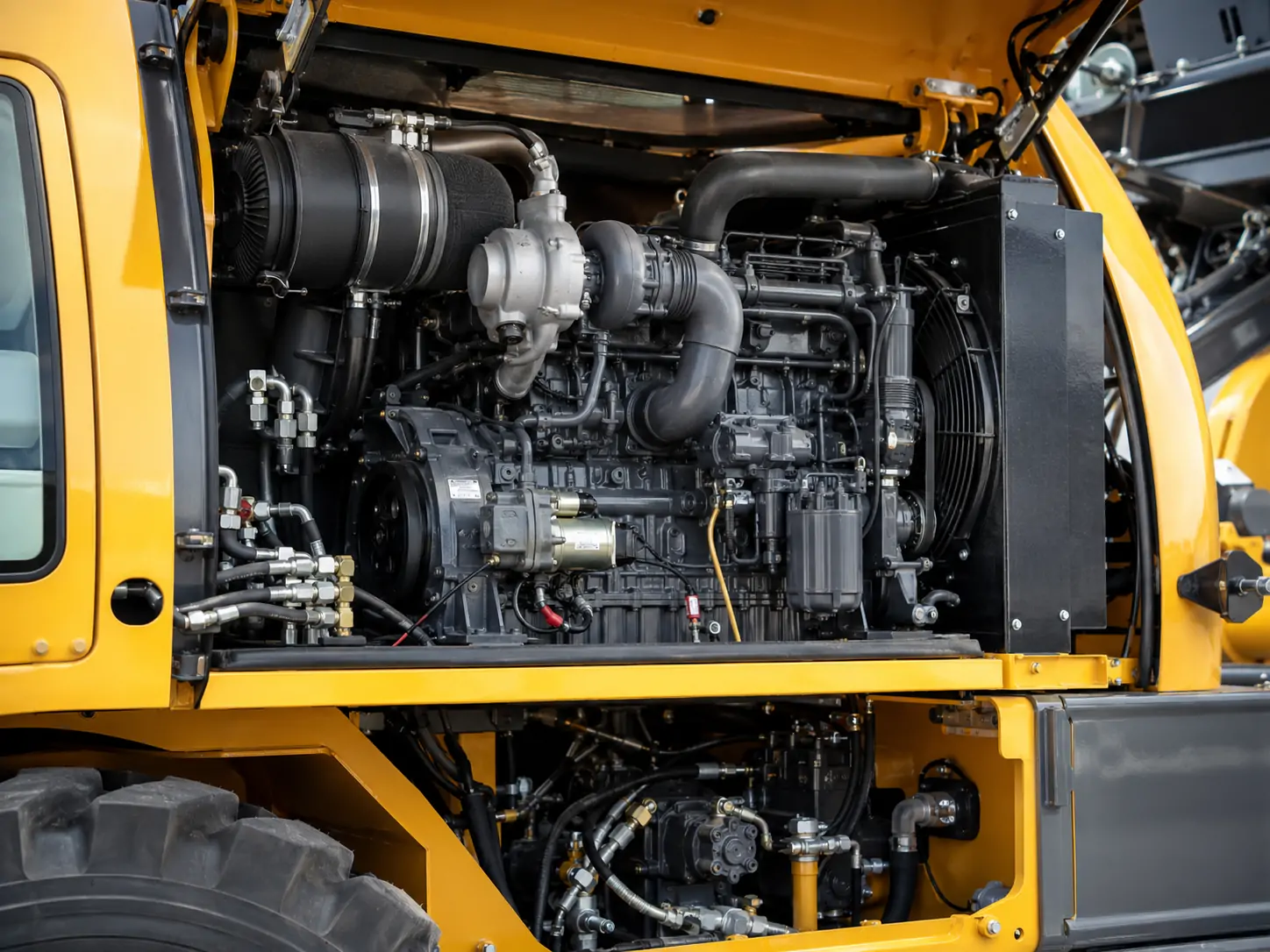
The engine is your most critical component—downtime equals lost revenue. Here’s what to look for:
Power Requirements by Capacity
| Mixer Size | Minimum Power | Recommended Power | Notes |
|---|---|---|---|
| 0.8-1.5 m³ | 50 kW | 58-65 kW | Yunnei 490 adequate |
| 2.0-2.6 m³ | 65 kW | 75-85 kW | Yuchai 4102 ideal |
| 3.5-4.0 m³ | 80 kW | 90-100 kW | Yuchai 4105/4108 |
| 5.0+ m³ | 100 kW | 115-130 kW | Cummins recommended |
Key Engine Features to Check
- Cooling system: Radiator size and capacity—critical for hot climates
- Fuel filtration: Dual filtration systems prevent injector damage from dirty fuel
- Air filtration: Pre-cleaner + main filter for dusty construction environments
- Service intervals: 250-hour oil changes are standard
- Parts availability: Verify local dealer support before purchasing
Where to Find Self Loading Concrete Mixers for Sale
Buying Directly from China Manufacturers (Recommended)
Self loading concrete mixer China manufacturers offer the best value globally, producing 80% of the world’s supply.
Pros:
- 30-50% lower prices compared to European or Japanese brands
- Direct factory support and technical assistance
- Customizable configurations to your specific needs
- Comprehensive spare parts packages
- Factory inspection opportunities
Cons:
- Requires handling import procedures (we can assist with this)
- Longer delivery times (30-45 days from order)
Buying from Local Dealers
Pros:
- Immediate availability
- Local service support
- May offer financing options
Cons:
- 20-40% more expensive due to dealer margins
- Limited model selection
- May have limited spare parts inventory
What to Check Before Buying
- Factory verification: Visit the factory if possible, or request a live video inspection
- Spare parts availability: Confirm critical parts are in stock and can be shipped quickly
- Warranty terms: Look for minimum 12-month or 2,000-hour warranty
- After-sales support: Does the supplier offer technical assistance via phone/WhatsApp?
- Customer references: Ask for references in your country or region
How to Choose a Self Loading Concrete Mixer in 7 Steps
Follow this proven process to select the perfect mixer for your business:
- Determine your required drum capacity (2.6m³, 3.5m³, or 4m³) based on project size and daily concrete needs
- Evaluate engine power and fuel efficiency for your specific job site conditions and climate
- Compare loading mechanism designs and cycle times to maximize daily productivity
- Assess maneuverability and tire types for your typical terrain and site access
- Verify cab comfort and ease of operation to reduce operator fatigue and turnover
- Calculate total cost of ownership including maintenance, parts, and fuel over 5 years
- Research manufacturer reputation and after-sales support before making your final decision
If you are comparing models based on budget, you can also read our self loading concrete mixer price guide to understand how capacity, engine, hydraulic system, shipping terms and after-sales support affect the final cost.
Frequently Asked Questions
Q: How much does a self loading concrete mixer cost?
A: Self loading concrete mixer prices range from $30,000 for a compact 0.8m³ model to $135,000+ for a 5.0m³ heavy-duty unit with Cummins engine. The most popular 2.6m³ size typically costs $62,000-72,000 FOB China. Contact us for current pricing →
Q: What size self loading mixer do I need?
A: Calculate your daily concrete requirement and divide by 5-6 batches per 8-hour day. Most contractors find 2.6m³ ideal for general construction, while 3.5m³ is better for road and infrastructure projects.
Q: How long does a self loading concrete mixer last?
A: With proper maintenance, a quality self loading mixer should last 8-10 years or 10,000+ working hours. Key factors affecting lifespan include regular oil changes (every 250 hours), proper greasing, hydraulic system maintenance, and timely replacement of wear parts like drum liners and mixer blades.
Q: Are self loading concrete mixers worth it?
A: Yes, for most small-to-medium contractors. The typical payback period is 9-18 months (depending on utilization), after which the machine generates pure profit. Unlike hiring ready-mix concrete, you control scheduling and quality, and avoid delivery delays and minimum order requirements.
Q: What is the difference between self loading and traditional mixer?
A: Traditional transit mixers only transport and agitate pre-mixed concrete from a batching plant. Self loading mixers perform the entire process: loading raw materials, weighing, mixing, and transporting. This eliminates the need for a separate batching plant ($50,000+) and loader ($30,000+), making them significantly more cost-effective for smaller operations.
Final Tips for Choosing Your Self Loading Mixer
Key takeaways from this guide:
✅ Start with capacity: Calculate your daily needs and add 20-30% buffer
✅ Prioritize engine reliability over brand name (ensure local parts support)
✅ Consider total cost of ownership, not just purchase price
✅ Verify after-sales support before committing to any supplier
✅ Ask for customer references in your country or region
Ready to Find Your Perfect Mixer?
Choosing the right self loading concrete mixer is a major investment decision that will impact your business productivity and profitability for years to come. At XQ Machinery, we’ve helped over 500 contractors across 40+ countries select the right equipment for their needs.
What You Get When You Buy From XQ:
✅ Factory-direct pricing with no dealer markup
✅ 12-month comprehensive warranty on all machines
✅ Free operator and maintenance training (on-site or video)
✅ Guaranteed spare parts availability for 10+ years
✅ Shipping and import assistance to your destination port
✅ 24/7 technical support via WhatsApp and phone
Get Your Personalized Quote Today
Tell us about your project requirements, and our equipment specialists will recommend the perfect mixer configuration and provide a detailed quotation within 24 hours.
👉 Request Your Free Quote from XQ Machinery →
👉 Email us at [email protected]
We look forward to helping you grow your construction business with reliable, affordable equipment.
Last updated: May 18, 2026 | Published by XQ Machinery Engineering Team